
What You Need to Know About the
SPRING VALLEY DISSOLUTION
Dissolution won't lower your taxes. It will cost this community its voice.
A response to the Village Board's dissolution study, for residents deciding how to vote in a potential referendum.
The Village Board hired the LaBerge Group to study dissolving Spring Valley and folding its services into the Towns of Ramapo and Clarkstown. Their official site is neutral by design: it's a fact-finding exercise required by state law. This page lays out the case for why residents should vote no. Read the source material yourself: labergegroup.com/springvalley
Counterpoint 01
Dissolution is unlikely to lower your taxes
Even the Village's own consultant admits there is no statewide research proving that village dissolutions save residents money. The two case studies the official site points to as examples make the point for us:
In South Nyack, estimated property tax savings were largely offset by new costs residents had to cover themselves, like paying a private hauler for garbage pickup instead of getting it through the village. In Mastic Beach, village tax levies had already spiraled out of control before the vote to dissolve, and the impact on town versus village residents was mixed at best.
On top of that, all existing Village debt stays with Spring Valley residents even after the Village itself is gone, and school and county taxes, the largest share of most tax bills, aren't affected by dissolution at all.
Counterpoint 02
The Towns decide what happens to your services, not you
By the consultant's own account at the July 7, 2026, public meeting, decisions about police staffing, public works, and zoning after dissolution belong to the Towns of Ramapo and Clarkstown, not to a plan that Spring Valley residents get to negotiate. About 90% of the village sits in Ramapo and 10% in Clarkstown, meaning residents would be split between two separate town governments, each free to set its own service levels going forward.
Right now, Spring Valley residents elect a mayor and trustees who answer directly to the village. After dissolution, that direct accountability disappears, replaced by town boards, in which Spring Valley voters are one constituency among many.
Counterpoint 03
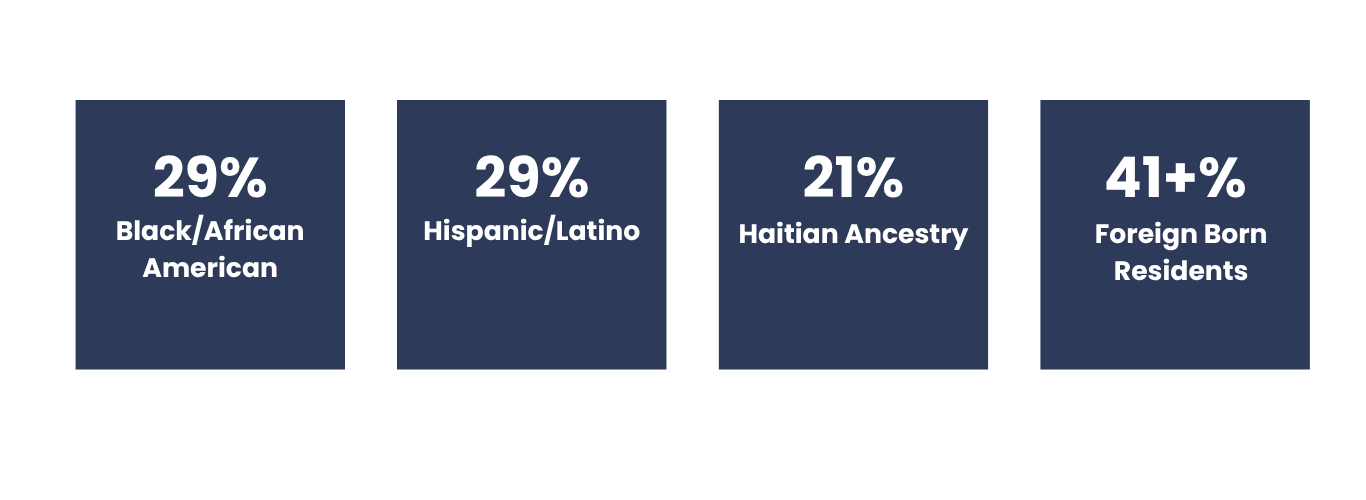
This disproportionately affects a majority-minority, immigrant community
Spring Valley has the second-largest Haitian diaspora per capita in the United States, a large and growing Latin American population, and a fast-growing Orthodox Jewish community. Folding this majority-minority village into two larger, wealthier towns risks diluting the political voice this community currently holds through its own elected government.
Counterpoint 04
Question: How did we get here?
Two prior citizen petitions to force a dissolution referendum failed; one was rejected outright for insufficient valid signatures. Rather than let that process run its course, the Village Board initiated dissolution itself, introduced without warning as unscheduled "new business" at a May 11, 2026, meeting. The Mayor abstained rather than supporting it. Neither town supervisor's office was even invited to the first public information meeting, so basic questions about jobs, police, and public works went unanswered.
Read the official Village Dissolution Plan materials, meeting schedule, and FAQ directly from the source.